Fintech development is the creation of technology solutions for the financial services industry, combining finance and technology to build innovative products like payment systems, banking applications, trading platforms, and blockchain solutions.
FinTech & Algorithmic Trading
We build high-performance trading systems with Rust, quantitative analysis, and ultra-low latency infrastructure.
- What is Fintech Development?
-
It requires specialized expertise in regulatory compliance (PCI-DSS, PSD2, GDPR), security best practices, real-time transaction processing, and integration with banking APIs and payment gateways.
Fintech solutions must meet strict standards for data protection, audit trails, and financial regulations.
We give you an edge in financial markets with high-performance algorithmic trading systems built in Rust for microsecond-level latency. We specialize in developing high-frequency trading (HFT) platforms, options market analysis systems, and quantitative trading strategies that execute thousands of trades per second with zero memory allocation in critical paths. Our expertise spans market microstructure, order book analysis, and execution algorithms (TWAP, VWAP, Iceberg, Sniper) optimized for maximum alpha generation.
We design ultra-low latency trading infrastructure using kernel bypass technologies (DPDK, io_uring), FPGA acceleration for order routing, and direct market access (DMA) connections to major exchanges. Our systems include real-time risk management, position monitoring, and automated circuit breakers that prevent catastrophic losses. We implement backtesting frameworks with historical market data, Monte Carlo simulations, and walk-forward optimization to validate strategies before live deployment.
Whether you need options pricing engines (Black-Scholes, Binomial, Monte Carlo), volatility surface modeling, or market-making strategies for crypto/forex/equities, we deliver production-ready solutions. From FIX protocol integration to cryptocurrency exchange APIs (Binance, Coinbase, Kraken), we build robust systems that handle market volatility, network failures, and exchange outages with zero data loss.
High-Frequency Trading (HFT)
- Rust trading engines with sub-microsecond latency
- Market microstructure analysis and order book modeling
- FPGA acceleration for order routing and matching
- Kernel bypass (DPDK, io_uring) for network optimization
Options Trading & Analysis
- Options pricing (Black-Scholes, Binomial, Monte Carlo)
- Implied volatility calculation and surface modeling
- Greeks calculation (Delta, Gamma, Vega, Theta, Rho)
- Volatility arbitrage and statistical arbitrage strategies
Quantitative Strategies
- Statistical arbitrage (pairs trading, mean reversion)
- Market making strategies with inventory management
- Machine learning models for price prediction and alpha generation
- Portfolio optimization and risk-adjusted returns (Sharpe, Sortino)
Risk Management & Compliance
- Real-time risk monitoring (VaR, CVaR, stress testing)
- Position limits and automated circuit breakers
- Trade surveillance and anomaly detection
- Regulatory compliance (MiFID II, Dodd-Frank, EMIR)
Backtesting & Simulation
- High-fidelity backtesting with historical tick data
- Monte Carlo simulations for strategy robustness testing
- Walk-forward optimization to prevent overfitting
- Paper trading environments for strategy validation
Exchange Connectivity
- FIX protocol integration for traditional exchanges
- Crypto exchange APIs (Binance, Coinbase, Kraken, FTX)
- WebSocket market data feeds with automatic reconnection
- Direct market access (DMA) with co-location support
FinTech & Trading Tools & Technologies
Trading Systems
Rust FIX Protocol FPGA Trading DPDK io_uring Market Data Order Routing WebSocket Co-location
Quant Libraries
NumPy / Pandas QuantLib SciPy Polars TA-Lib PyTorch Black-Scholes Monte Carlo Binomial Trees
Exchanges & Platforms
Binance Coinbase Kraken Interactive Brokers CME / ICE NYSE / NASDAQ Eurex Bybit / OKX
Data & Analytics
TimescaleDB ClickHouse QuestDB Apache Arrow Backtesting Jupyter Plotly / Matplotlib CCXT
Business Impact of FinTech & Algorithmic Trading
Execute thousands of trades per second with microsecond-level latency
Generate consistent alpha through quantitative strategies and ML models
Manage risk in real-time with automated circuit breakers and position limits
Optimize options portfolios with precise Greeks calculation and hedging
Validate strategies with high-fidelity backtesting before live trading
Connect to multiple exchanges with FIX protocol and REST/WebSocket APIs
Related Projects
Real-world implementations demonstrating this expertise.
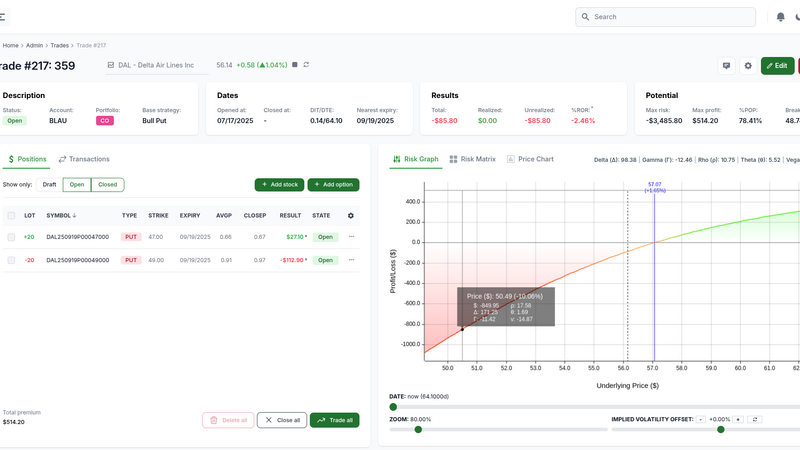

Option Panel - High-Performance Rust Options Trading Platform
Professional web-based options analysis platform combining the power of Rust and WebAssembly to perform complex financial calculations with exceptional performance, including Greeks analysis, multi-leg strategies, risk assessment and profitability evaluation with ultra-low latency.
RustLeptosWebAssembly
+9
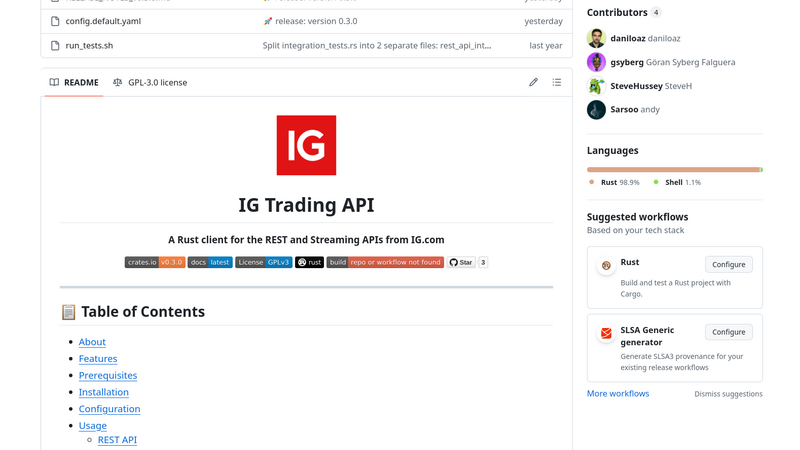

IG.com Rust Client - Open Source SDK for Algorithmic Trading
Professional Rust SDK for IG.com REST and Streaming APIs. First complete Rust client library enabling integration with algorithmic trading platforms, account management, order execution, and real-time market data. Published on crates.io as open-source contribution.
RustAlgorithmic TradingREST API
+3
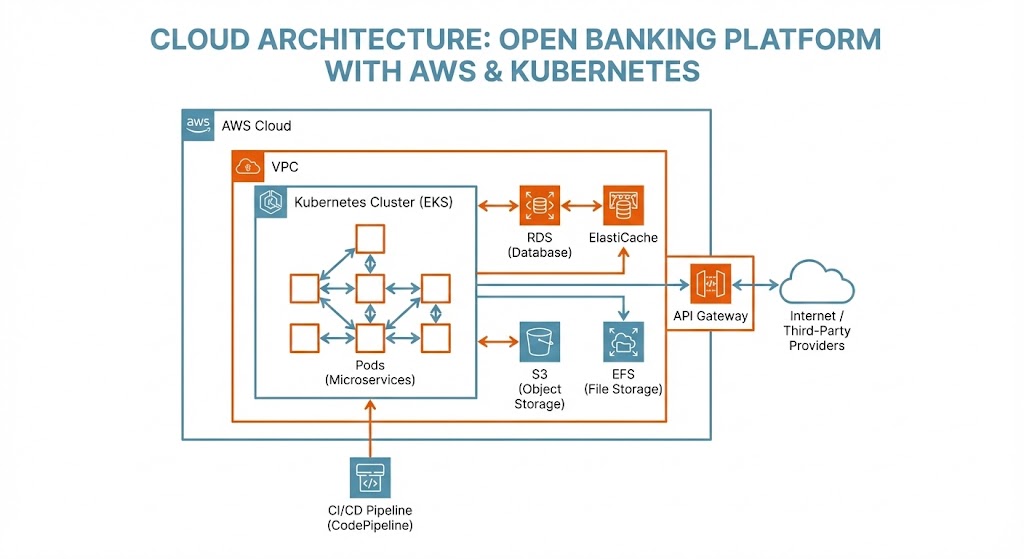

Cloud Infrastructure Migration for Open Banking Platform (Eurobits/Tink/Visa)
Management of complete infrastructure migration from on-premise to cloud (IBM Cloud and AWS) for an Open Banking platform. Design of modern cloud architectures, migration of hundreds of servers, and legacy infrastructure support during transformation process in a highly regulated international environment.
AWSIBM CloudKubernetes
+10
Why Work With Us
Direct access to 25+ years of hands-on expertise.

Daniel López Azaña
Technical leadership (CTO)

Miriam Sainz Sánchez
Operations leadership (COO)
Your team
The navat.ai team
Two founding partners with separate roles. One leads the architecture, the AI integration and the code; the other, management, design and the mobile apps. A network of our own AI agents and trusted collaborators lets the team scale when a project needs it.
Meet the team25+ Years Experience
25 years of real-world experience designing, building, and optimizing production systems for startups and enterprises alike.
AI in everything we do
We apply AI across our own processes and those of our clients. It multiplies delivery speed and widens what a team can take on.
Hands-On Technical Experts
We write the code, configure the infrastructure and solve the problems. Whoever designs the architecture also deploys it and keeps it running.
Proven Results
Track record of reducing infrastructure costs by 40-60%, improving performance, and delivering projects on time.
Direct Communication
Work directly with us—no account managers or intermediaries. Clear, technical discussions with fast response times.
Bilingual Support
Fluent in English and Spanish, with clients across Europe and the Americas. Documentation, meetings and reports in the language your team prefers.
Frequently Asked Questions
Common questions about fintech development services.
Fintech development is the creation of technology solutions for financial services, including payment processing systems, trading platforms, banking applications, and investment tools. It combines software engineering expertise with deep understanding of financial regulations, security requirements, and market dynamics. Our fintech services cover algorithmic trading systems in Rust, payment gateway integrations, Open Banking implementations, and real-time transaction processing with sub-millisecond latency.
Digital transformation in finance is essential because traditional institutions face disruption from agile fintech startups and changing customer expectations. Modern consumers demand instant payments, mobile-first experiences, and 24/7 access to financial services. By implementing high-performance trading systems, automated compliance, and real-time analytics, financial organizations can reduce operational costs by 40-60%, improve customer satisfaction, and stay competitive in an increasingly digital marketplace.
Fintech development follows a rigorous process starting with regulatory compliance assessment and security architecture design. We then build proof-of-concept systems for validation, followed by iterative development with continuous testing against financial edge cases. Key phases include payment integration, security hardening, load testing for peak transaction volumes, and regulatory audits. The process typically takes 4-8 months for MVP, with ongoing iteration for feature expansion and compliance updates.
Fintech services benefit traditional banks modernizing legacy systems, startups building new financial products, investment firms requiring algorithmic trading platforms, payment companies scaling transaction processing, and enterprises needing secure financial integrations. Whether you are a hedge fund seeking low-latency trading infrastructure, a neobank building mobile payments, or an e-commerce platform integrating payment gateways, specialized fintech development ensures regulatory compliance and competitive performance.
Fintech development costs vary based on complexity, regulatory requirements, and security needs. A basic payment integration might start at $30,000-50,000, while comprehensive trading platforms range from $150,000-500,000+. Key cost factors include PCI-DSS certification requirements, multi-currency support, exchange integrations, and regulatory compliance across jurisdictions. We provide detailed estimates after analyzing your specific requirements, with transparent pricing that accounts for ongoing compliance and security maintenance.
For fintech applications, MVP typically takes 3-5 months, including basic payment processing or trading functionality with essential compliance features. Full production deployment requires an additional 2-4 months for security audits, penetration testing, regulatory certification, and stress testing under real-world transaction volumes. Algorithmic trading systems may require longer validation periods with paper trading before live deployment to ensure strategy robustness.
Fintech applications must comply with multiple regulations depending on their function and geography. PCI-DSS governs card payment security with 12 requirement domains. PSD2/PSD3 regulates European payment services with Strong Customer Authentication (SCA). MiFID II covers investment services and algorithmic trading. Additional requirements include GDPR for data protection, AML/KYC for anti-money laundering, and SOC 2 for operational security. We design systems with compliance built-in from the architecture level.
A fintech specialist brings deep domain expertise in financial regulations, payment protocols (FIX, SWIFT, SEPA), and security requirements that general developers lack. We understand market microstructure for trading systems, can implement proper audit trails for regulatory compliance, and know how to handle edge cases like split payments, chargebacks, and settlement failures. This specialized knowledge prevents costly compliance violations and security vulnerabilities that could result in regulatory fines or data breaches.
Fintech implementations deliver measurable outcomes including transaction processing at thousands of operations per second with sub-millisecond latency, 99.99% system uptime for mission-critical financial operations, and successful regulatory audits. Trading systems typically achieve execution speeds 10-100x faster than traditional platforms. Payment systems reduce transaction costs by 20-40% through optimized routing. User adoption rates improve by 30-50% with modern, mobile-first financial experiences.
We implement defense-in-depth security with end-to-end encryption (TLS 1.3, AES-256), HSM integration for key management, and zero-trust architecture. All systems include comprehensive audit trails for regulatory compliance, real-time fraud detection, and automated circuit breakers. Code is written in Rust for memory safety, eliminating common vulnerability classes. We provide security documentation for auditors, support during compliance certifications, and ongoing security maintenance with vulnerability scanning.
Getting started involves a discovery session to understand your business requirements, regulatory obligations, and technical constraints. We then conduct a compliance assessment to identify applicable regulations and security requirements. From there, we create a technical architecture proposal with cost estimates and timeline. Initial engagement typically includes a proof-of-concept to validate key integrations before full development begins, ensuring alignment with your business goals and risk tolerance.
Our technical fintech capabilities include payment gateway integrations (Stripe, Adyen, PayPal), Open Banking APIs (Plaid, Tink, TrueLayer), cryptocurrency payment rails, and SWIFT/SEPA messaging. For trading, we build FIX protocol connectivity, WebSocket market data feeds, order management systems, and algorithmic execution engines. Infrastructure includes blockchain integration for DeFi applications, real-time analytics with TimescaleDB, and high-availability architectures with automatic failover.
Ready to Transform Your Business?
Tell us about your project and let's explore together how technology can help you achieve your goals.
Or, if you prefer, write to us directly at: info@navat.ai